
• Skip to content
  • Skip to primary sidebar
  • Skip to footer
  • Skip to main navigation
  • Skip to current students navigation

Site Header Phone Number

608-262-2011

Site Header Apply

Apply Now

Site Header Current Students Navigation

Current Students

Click a link below for program specific Canvas access and resources.

  • Degrees

    • Arts & Science
    • Business Administration
    • Diagnostic Imaging
    • Health Sciences
    • Information Science & Technology
    • Nursing Degree (RN to BSN)
  • Certificates

    • Business Analytics
    • Health Care Informatics
    • Agile Project Management
    • Substance Use Disorders

University of Wisconsin Flexible Option

Site Header Main Navigation

Menu

  • Programs
    • Degrees

      • Associate of Arts & Science
      • Business Administration
      • Diagnostic Imaging
      • Health Sciences
      • Information Science & Technology
      • Nursing Degree (RN to BSN)
    • Certificates

      • Business Analytics
      • Health Care Informatics
      • Agile Project Management
    • Non-Credit Certificates
      • Substance Use Disorders
      • Agile Project Management Non-credit
    • Microcredentials
      • Interprofessional Leadership in Healthcare Microcredential
  • Getting Started
    • How to Apply
    • UW Flexible Option Admission
    • Talk to an Enrollment Adviser
    • Technology Requirements
    • Veterans
    • Special Students
  • Tuition & Financial Aid
    • Tuition

      • Payments & Refunds
      • Withdrawals
    • Financial Aid

      • Financial Aid Overview
      • Types of Aid
      • Applying for Financial Aid
      • Cost of Attendance
      • Disbursements & Refunds
      • Maintaining Eligibility
      • Impacts of Enrollment Changes
      • Repeating a Course and Financial Aid
      • Net Price Calculator
    • Quick Links

      • Academic Calendar
      • Academic Plan of Study (APS)
      • Definition of Terms
      • Establishing Attendance
      • Financial Aid FAQs
      • Financial Aid Forms
      • Financial Aid Tools
      • Make Payment
      • Contact Us
  • Stories & News
  • About
    • How UW Flexible Option Works
      • Frequently Asked Questions
      • What is Competency-Based Education?
    • Faculty & Staff
    • Annual Report
    • Academic Calendar

Site Header Search

Search Site

Show Search

Archives for September 2025

Four Strategies To Help You Earn Your Degree as a Working Parent

September 30, 2025 -

It’s tough being a working parent. It seems like you’re always racing to get your kids to school before work, and then after working a full day, you’re running errands or chauffeuring your kids to sports practice. And somehow, you have to get it all done before you can even think about starting your homework.

For most adults, balancing family and work is a challenge. Adding the stress of returning to school on top of that can be completely overwhelming. If this sounds familiar, you are not alone!

Every year, millions of adults over the age of 25 enroll in college, and many of these individuals have kids. According to Bestcolleges.com, during the fall of 2023, 3.9 million adults were considered undergraduate adult learners, of which 62% were women. In spring 2020, half (48%) of enrolled adult learners reported having dependent children compared to just 3% of traditionally-aged students (aged 18-24).

With an increasing number of adults – many working parents – seeking their degree, schools nationwide have begun working to accommodate the needs of students whose schedules do not allow them to attend traditional college classes. Competency-based degree programs can be an ideal way to earn a degree for parents on an already hectic timeframe.

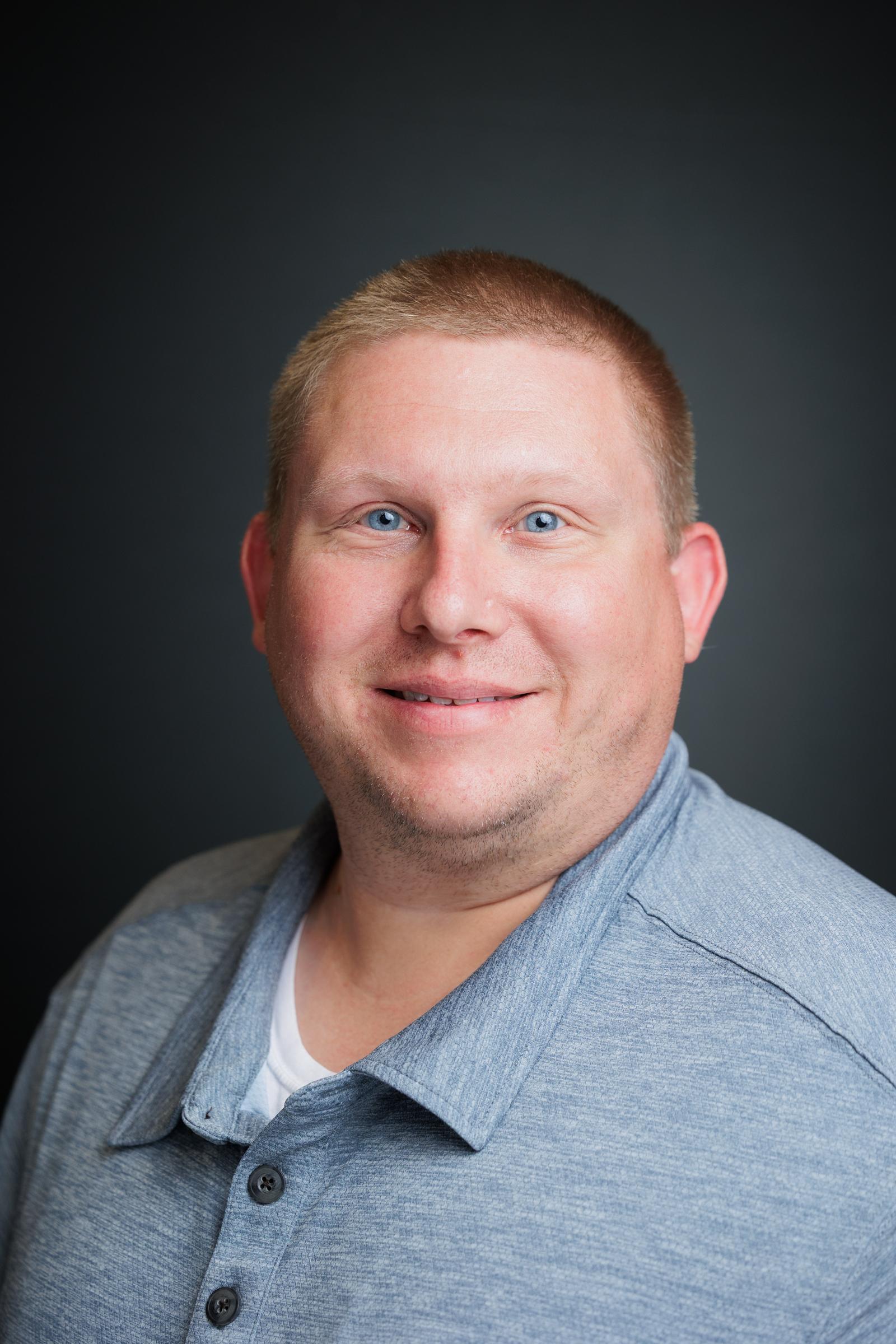
Shannon Fitzgerald, a student in the online UW-Parkside Bachelor of Science in Business Administration program, works full-time while raising a family. He’s also frequently on the road for his job. UW Flexible Option makes it possible for him to get an education while being there for his family.

A day in life includes work, school, and time for his family. Shannon spends the majority of his time visiting customers, and when he’s not, he’s working remotely or in the regional office. Typically, he’s in front of the computer by 7 a.m., finishing around 4 p.m. when his girlfriend gets home from work and the kids return from school. They eat dinner together, and then he reads and works on assignments. “It depends on what other things I have going on at home, but usually I try to put two to three hours aside for schoolwork.”

For Fitzgerald, flexibility is more than just a “nice to have”–it’s a “must-have.” 

“Our house is full of pets and kids, and with [traveling so much], I didn’t want to have to worry about having to take night classes,” he said. “I’ve literally done assignments in Pennsylvania and overseas. I had to speak at a conference in Edinburgh, Scotland, and I was doing coursework over there to finish up.”

In addition to finding a program that revolves around your schedule, here are some tips to make going to school as a working adult much easier:

Set a schedule and stick to it.
When you enroll in UW Flexible Option, you’ll be assigned an Academic Success Coach. Your coach can work with you to come up with ways to manage your time so that you can study and manage your responsibilities. When creating your study schedule, ask yourself: When will it be easiest for me to work? Maybe you prefer to study when everyone is asleep at night. Maybe you have a long lunch break or can carve out some time after work or on the weekend. Be realistic, though—can you really wake up at 4 a.m. and be productive? Will you be able to work in the house if your kids are running around in another room? 

And, don’t forget to give yourself some grace at times. For Mellissa Shilts, a graduate of the UW-Milwaukee Bachelor of Science in Biomedical Sciences: Health Sciences program, it took her about two subscription periods to hit her stride after making a schedule. Mellissa has three boys and works two jobs, which means she couldn’t take any spare time for granted. 

“I looked at how many things I was required to submit,” she says. “I made sure I still had time to breathe and focus on my kids. There were weeks where it was tough. But if you want it, it’s worth working for. I always try to remember that.”

And, with a competency-based education, you’ll be rewarded for knowledge and skills you already have, whether from prior coursework or work experiences. Students’ progress is measured by their mastery of concepts, rather than how much time they have spent in a course. The more you know, the faster you can go through your program!

Include your family in your routine.
If your kids are a little older, set aside an hour when you all do homework together in one room. If they don’t have homework, they can work quietly on another project, like reading, drawing, or writing a letter. Not only will you get your homework done, but you’ll be helping your children develop their own study skills. If your children see how important school is to you, there’s a good chance they’ll carry those values with them as they progress in their own education.

And remember, with an online degree program, you can create a flexible schedule that works around your family obligations if doing homework or studying together doesn’t work in your situation.

Don’t be afraid to seek out support.
Even if you’re working on your own schedule, you’ll need to find some quiet time to study, and this might require you to lean on others for help.

Sonia, a graduate of the UW-Milwaukee Bachelor of Science in Biomedical Sciences: Health Sciences program, completed her degree while raising children. When her husband was home on Saturday and Sunday from work, he took the children outside and did errands like grocery shopping so that she could stay home and study. Having this arrangement gave her the ability to focus on her courses without being interrupted.

If this isn’t an option, perhaps a family member can take your kids once in a while to give you time to study, or consider using a babysitter. Older kids may be able to help with chores to free up some of your time. If you have a system in place before your subscription period begins, you’ll have some peace of mind knowing that you can focus on school when a deadline is approaching.

Be adaptable and ready to pivot with whatever life throws your way.
While it’s important to stick to your schedule, it’s also impossible to predict what might happen day to day.

“Try to start early,” Sonia advises. “Do not wait until three weeks have passed because you only have 12 weeks [in your subscription period]. When I start early, it’s less stressful. Life happens. Kids get sick, we get sick, or there’s an emergency.”

And if something does come up, don’t get discouraged! Know that your work toward a degree will help your career, ultimately improving your family’s life in the long run. And if you do need some time off, UW Flexible Option allows you to take breaks between subscription periods.

Although making time to earn your degree might seem difficult at first, competency-based degree programs like UW Flexible Option make it possible to fit an education into your schedule—not the other way around.

To find out more about UW Flexible Option and whether a competency-based education option is a good fit for you, call an enrollment adviser today at 1-877-895-3276.
 

Filed Under: Degree Program Tagged With: Uw Flexible Option, online competency-based education, diagnostic imaging, Business Administration

Online RN-to-BSN Program: How UW Flexible Option Prepares You for Graduate Nursing (MSN, DNP, PhD)

September 17, 2025 -

Do you have aspirations of becoming a nurse practitioner or a nursing educator? As an RN, earning your bachelor’s degree in nursing is a crucial first step toward achieving your goals, especially if your dream job requires you to attend graduate school. 

A BSN is a prerequisite for a master’s degree in nursing, a DNP or PhD. If you’re searching for nursing bachelor’s programs, be sure to seek out ones where you’ll learn both durable and clinical skills to help you think like a graduate-level nurse. 

The UW-Milwaukee RN-to-BSN program through UW Flexible Option will not only help you get your four-year degree 100% online while working full-time, you’ll also learn important skills like critical thinking, collaboration, communication, and leadership. All of these skills are necessary for success in graduate school, where students are encouraged to critically analyze research to make decisions and improve policy. 

Here’s how the UW Flexible Option RN-to-BSN program will prepare you for graduate school:

  1. Competency-Based Learning That Builds Self-Discipline. UW Flexible Option’s competency-based educational format rewards your ability to master concepts, not the amount of time you’ve spent in class. Because you can start any month and work at your own pace, you can tailor your learning experience to fit your life and your needs. You’ll also benefit from knowledge you’ve gained through prior coursework, military training, on-the-job training, or other experiences. This format will help you cultivate self-discipline and deep understanding of nursing subjects, which is crucial to succeed in the independent learning environment of graduate school.
  2. Critical Analysis and Decision-Making Skills. Courses such as NURS 446, Research and Evidence-Based Practice, equip you to critically analyze and integrate research—a core expectation in MSN, DNP, or PhD programs.
  3. Leadership and Critical Thinking Skills. In the nursing capstone, which requires students to undertake a quality improvement project in the workplace, you’ll learn how to create system-level change in your organization – another key foundation for successful graduate work. The capstone practicum, NURS 445, specifically teaches clinical skills along with problem-solving, critical thinking, understanding systems, and the role of research, while offering you a chance to work on projects that actually improve patient care in your workplace. This aligns with many nursing graduate programs that emphasize advocating for policies to improve patient outcomes.
  4. Strong Durable Skills, Including Advanced Communication and Professional Writing. NURS 407X, Foundations of Nursing Practice, will challenge your writing and communication skills. In this course, philosophical perspectives, theories, and standards are applied to the practice of professional nursing. You’ll also analyze factors influencing nursing and healthcare delivery. This writing emphasis course will prepare you for the intensive writing assignments you’ll complete in graduate school. 
  5. Resilience, Adaptability, and Time Management Skills to Excel in Graduate School. Because UW Flexible Option has no set class times, you’ll be challenged to implement time management strategies to complete coursework while working full-time and juggling life’s many commitments. Learning how to pivot when necessary while managing a full course load and other responsibilities will give you the tools to succeed in a challenging graduate program.

Other benefits of completing a bachelor’s program include the ability to truly understand where you want to work in the healthcare field. Jeanette Williams, a graduate of the RN-to-BSN program, says her nursing coursework gave her the opportunity to change directions.

“When I started [the program], I was thinking about going into public health nursing,” she said “I took the public health class and decided it was absolutely not for me.”

Instead, she shifted her focus to mental health. While in her associate degree program, Jeanette was introduced to mental health topics and enjoyed the courses, but got the opportunity to dive deeper into the topic during NURS 448: Mental Health Nursing Across the Care Continuum, an elective course in the BSN program. Seeing the opportunities and increased needs in the mental health field, Jeanette planned on a psychiatry graduate program.

Are you looking for a flexible, online nursing bachelor’s degree program to give you the skills and knowledge necessary to enter a graduate program? Connect with an enrollment adviser today by emailing flex@uwex.wisconsin.edu. 

Filed Under: UW Flexible Option Programs, Degree Program Tagged With: Uw Flexible Option, nursing, bachelor's degree, graduate school

7 Questions With a Health Sciences Graduate: Meet Jeremiah Dumke

September 3, 2025 -

Jeremiah Dumke is a recent graduate of the 100% online University of Wisconsin-Milwaukee Bachelor of Science in Biomedical Sciences: Health Sciences through UW Flexible Option. He offered some insight into his experience in the program.

1. What made you decide to enroll in UW Flexible Option?

The program gave me the best opportunity to use all of my past University of Wisconsin credits. Since I work at a healthcare facility, the Health Sciences degree would build upon my understanding of health care. The timeline that one could work toward a degree also helped as I had many personal things that required me to step away for a term here and there. This flexibility is great for individuals who have a family. The price point was fantastic compared to other programs out there.

2. What was your overall experience like in the program?

I loved the program. The professors were very insightful. The feedback from every paper or assessment I turned in kept improving my understanding of the health care systems. The flexibility is great.

Jeremiah Dumke headshot3. Tell me about what you plan to do now that you’ve finished your degree. How will this impact your career?

I work in the facilities side of health care with the projects and building repairs. This Health Sciences degree helps me understand how and where the medical side is making decisions, and why facilities must do items a certain way that may interrupt patient care. There is less pushback because of the understanding that is in place now.

4. Where do you see yourself in five years?

In five years, I see myself moving into a manager position as the company I work for grows. Having the Health Sciences degree gives me opportunities in the clinics or management roles in facilities.

5. What role did success coaching play in your academic experience? Were you in touch with your coach often?

My coach helped me choose what order or groupings of courses to take at the same time. If I wanted to take two upper-level courses, my success coach gave me great recommendations on which courses to pair that could be completed in the term. When I had questions, they always responded in a timely manner. I did not have to reach out a lot though.

6. What advice might you give someone who is considering enrolling in this program?

My advice would be if you are thinking about enrolling, reach out with questions. If you are not sure what the classes would encompass, UW Flexible Option would give you ideas of what you will learn. The degree provides great insight and better communication in a professional way for all levels in health care that can help anyone grow.

7. Is there anything else you’d like to share about your background, your experience, etc.?

Working in facilities and planning at a hospital over the last almost seven years has brought me great understanding in one aspect of health care. I understand how the facilities affect so many different aspects to provide the greatest care. Working my way up to my current role of Life Safety Analyst (which focuses on making sure the facility complies with fire, building, and life safety codes so that patients, staff, and visitors are protected in emergencies) has let me work with all parts of healthcare from the environmental services to hospital leadership. These experiences, combined with what I have learned in this degree program, are making me more effective in my role. I am working better with the teams and conveying facilities items in ways all of my colleagues can understand according to their expertise.

Are you a working adult like Jeremiah who may have some college credits but hasn’t yet received a four-year degree? Through the University of Wisconsin Flexible Option, you can earn your degree through a 100% online, self-paced format that fits any schedule. Contact us to learn more today.

Filed Under: Student Stories Tagged With: Uw Flexible Option, Health Sciences

Primary Sidebar

Blog Program Guide

Get Degree Guide

Download an introductory guide (PDF) to the self-paced, competency-based UW Flexible Option programs, including details about costs, admission requirements, and more.

Download now

Step 1 of 2

0%
  • This field is for validation purposes and should be left unchanged.
  • By selecting yes, I agree to receive updates about online degrees, events, and application deadlines from the Universities of Wisconsin.

    Msg frequency varies depending on the activity of your record. Message and data rates may apply. Text HELP for help. You can opt out by responding STOP at any time. View our Terms and Conditions and Privacy Policy for more details.

Footer

Pages

  • UW Flexible Option Programs
  • Getting Started
  • Tuition & Financial Aid
  • Current Students
  • Stories & News

Connect

  • Facebook
  • Linkedin
  • Youtube

Contact

Flexible Option Enrollment Team
University of Wisconsin Extended Campus

608-262-2011
flex@uwex.wisconsin.edu
Fax: 608-262-4096

Technical Support

1-877-724-7883 (toll free)
Get Help


A Collaboration of the Universities of Wisconsin

University of Wisconsin System

The Universities of Wisconsin are comprised of UW-Eau Claire, UW-Green Bay, UW-La Crosse, UW-Madison, UW-Milwaukee, UW-Oshkosh, UW-Parkside, UW-Platteville, UW-River Falls, UW-Stevens Point, UW-Stout, UW-Superior, and UW-Whitewater.

Copyright © 2026 Board of Regents - University of Wisconsin System. All Rights Reserved.
Site Map | Privacy Policy | Log in